Q1 Answer
Here is one possible solution.
The largest subnet needs enough space for 44 hosts.
25 - 2 = 62 useable host addressess...
... which is the nearest size adequate for the this number of host addresses. So, the network can be divided as follows...
| Subnet Number |
Subnet Address |
0 |
193.100.4.0/26
|
1 |
193.100.4.64/26
|
2 |
193.100.4.128/26
|
3 |
193.100.4.192/26
|
Subnet 0 can contain Lan A
Subnet 1 can be divided into two smaller subnets with 30 useable host addresses in each.
| Subnet No |
Sub-subnet No |
Sub-subnet Address |
1 |
0
|
193.100.4.64/27 |
1
|
193.100.4.96/27 |
Sub-subnet 0 can contain Lan B
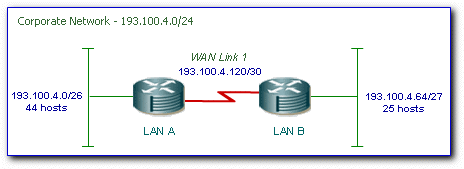
Part of Sub-subnet 1 can be divided further to contain the WAN link addresses. I.e. 193.100.4.120/30
So we will have...
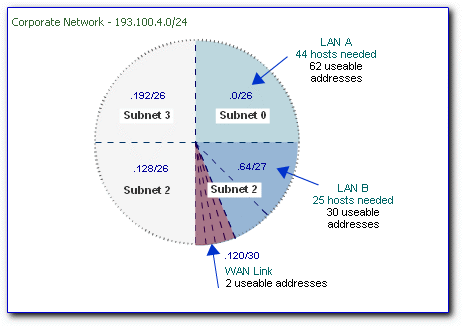
Here is a diagramatic view of the network showing the subnet addresses.
|


 Chapter 1 - Introduction to Classless Routing